Dialysis Access Surgery
Introduction to Dialysis Access Surgery
Dialysis access surgery is an important procedure for patients with advanced kidney failure who require dialysis treatment. Dialysis is a lifesaving therapy that removes waste products and excess fluid from the blood when the kidneys are no longer able to perform this function effectively. For dialysis to work properly, doctors need a safe and reliable way to move blood from the body to the dialysis machine and back again. This is achieved by creating a vascular access, which is a specially prepared blood vessel connection that allows repeated dialysis treatments. A well-functioning dialysis access ensures that blood flows smoothly during dialysis sessions and reduces the risk of complications. Vascular surgeons carefully choose the most suitable access method based on the patient’s vein condition, medical history, and long-term dialysis needs.
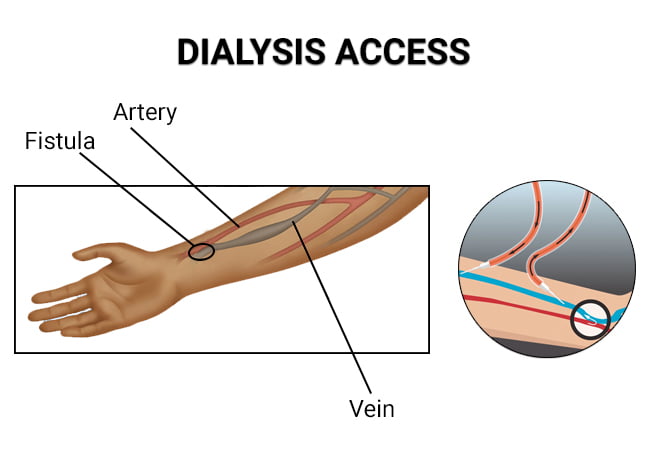
Overview of Dialysis Access
Dialysis Access Type | Description | Duration |
AV Fistula | Direct connection between an artery and vein | Long-term |
AV Graft | Synthetic tube connecting artery and vein | Long-term |
Venous Catheter | Tube placed into a large vein | Temporary |
Among these options, an AV fistula is generally considered the most reliable and preferred form of dialysis access.
What is an AV Fistula?
An Arteriovenous (AV) fistula is created by surgically connecting an artery directly to a vein, usually in the forearm or wrist. This connection increases blood flow through the vein. Over time, the vein becomes stronger, thicker, and larger. This process is known as fistula maturation, and it allows the vein to handle repeated needle insertions during dialysis treatments. AV fistulas are widely recommended because they provide stable blood flow and tend to last longer compared to other dialysis access options.
Benefits of AV Fistula
AV fistulas offer several advantages for patients undergoing dialysis.
- Lower risk of infection compared to catheters or grafts
- Better blood flow for effective dialysis sessions
- Longer lifespan compared to other access types
- Lower chances of clot formation
- Improved dialysis efficiency
Because of these advantages, doctors often recommend AV fistula creation whenever the patient’s veins are suitable.
What is an AV Graft?
In some patients, the veins may be too small or weak to create a fistula. In such cases, a vascular surgeon may recommend an Arteriovenous (AV) graft. An AV graft uses a small synthetic tube to connect an artery to a vein. The graft acts as an artificial blood vessel that allows blood to flow easily during dialysis treatments. AV grafts can usually be used sooner than fistulas because they do not require a long maturation period.
Advantages of AV Graft
AV grafts are useful when natural veins are not suitable for fistula creation. Benefits include:
- Provides reliable dialysis access
- Can be used earlier than a fistula
- Suitable for patients with smaller veins
- Allows effective dialysis blood flow
However, AV grafts may have a slightly higher risk of infection or clot formation compared to AV fistulas.
Venous Catheters: A Temporary Dialysis Access
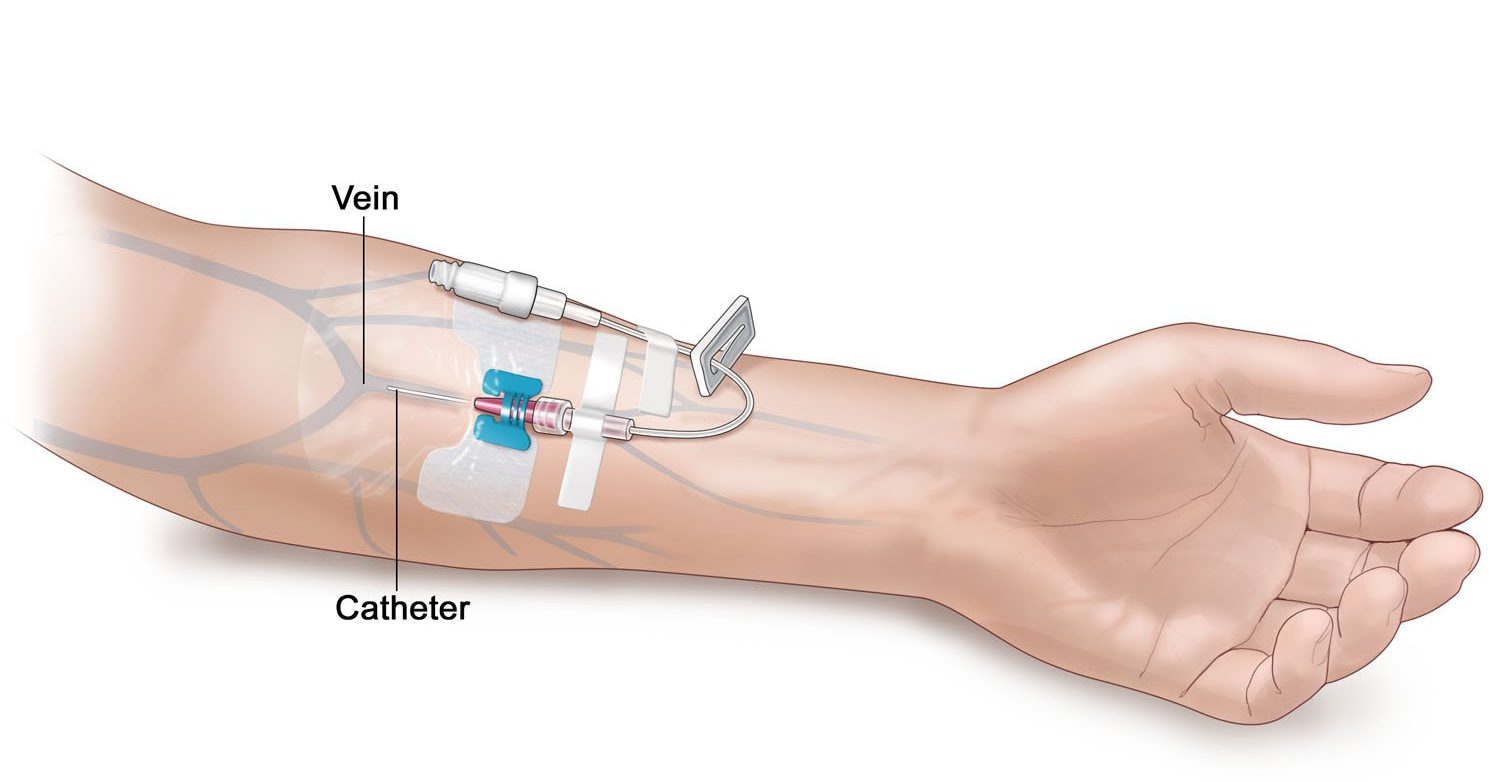
Sometimes dialysis must begin urgently before a fistula or graft can be created. In such cases, doctors may place a venous catheter. This catheter is inserted into a large vein in the neck, chest, or thigh and allows blood to flow to the dialysis machine. Although venous catheters allow immediate dialysis, they are generally used as a temporary solution because they carry higher risks of infection and vein damage
Permacath: A Tunnelled Dialysis Catheter
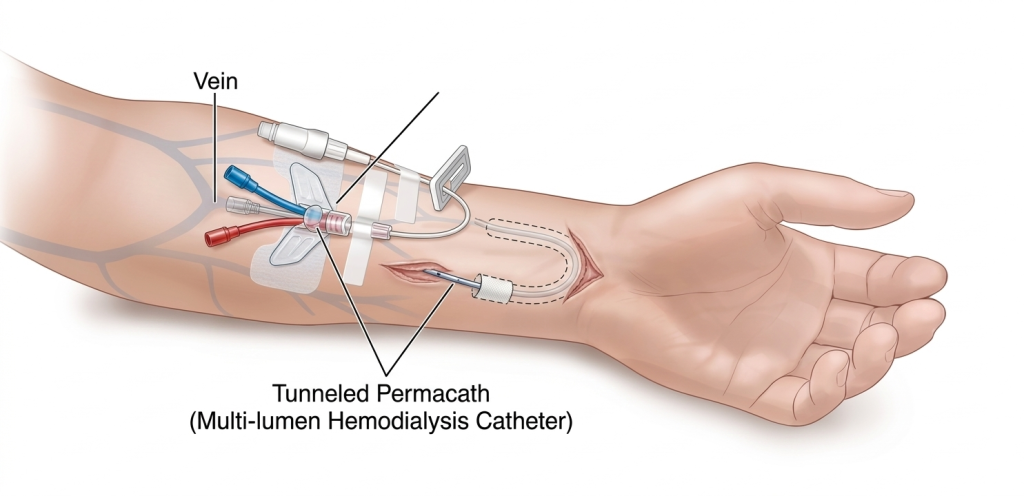
For patients who require dialysis access for a longer period but cannot immediately receive a fistula or graft, a Permacath may be inserted. A Permacath is a tunnelled catheter placed into a large vein in the neck. The catheter passes under the skin and exits near the chest, which reduces infection risk compared to temporary catheters. Permacaths allow dialysis to begin immediately, but they are still considered a temporary option until a permanent access such as a fistula or graft is created.
Complications of Dialysis Access
Although dialysis access procedures are generally safe, complications can sometimes occur over time. Early detection and treatment help maintain proper function of the access site.
Aneurysm
An aneurysm refers to swelling or bulging of the blood vessel wall at the fistula or graft site. If the swelling becomes large, it may affect dialysis efficiency or increase the risk of skin damage.
Stenosis
Stenosis is the narrowing of the blood vessel within the dialysis access. Reduced blood flow may make dialysis sessions less effective. Treatment often involves angioplasty, where a small balloon is used to widen the narrowed vessel.
Thrombosis
Thrombosis occurs when a blood clot forms within the fistula or graft, blocking blood flow. Doctors may treat this condition using:
- clot dissolving medication
- angioplasty
- surgical clot removal
Regular monitoring helps detect these problems early.
Caring for Your Dialysis Access
Proper care of the dialysis access site is essential to ensure effective dialysis treatments and reduce the risk of complications.
Keep the Access Site Clean
Maintaining good hygiene helps prevent infections. The access area should always be kept clean before dialysis treatments.
Use the Access Only for Dialysis
The dialysis access site should not be used for blood tests, injections, or IV lines. Using it only for dialysis helps preserve the blood vessel.
Protect the Access Arm
Avoid injuries, cuts, or pressure on the arm containing the fistula or graft. Even small injuries may damage the access site.
Avoid Blood Pressure Checks on the Access Arm
Blood pressure cuffs can compress the fistula or graft and interfere with blood flow.
Avoid Tight Clothing
Wearing tight sleeves, watches, or jewellery on the access arm may reduce blood flow.
Check the Access Daily
Patients should feel for a gentle vibration known as a “thrill” over the access site. This vibration indicates that blood is flowing normally. If the vibration disappears, medical attention should be sought immediately.
Signs Your Dialysis Access Needs Medical Attention
Contact a doctor if you notice:
- swelling or redness near the access site
- bleeding from the fistula or graft
- fever or signs of infection
- sudden loss of vibration in the access
- difficulty during dialysis sessions
Early treatment can prevent access failure.
Why Choose Dr. Sravan for Dialysis Access Surgery
Dr. Sravan, CPS, is an experienced vascular and endovascular surgeon who specializes in dialysis access surgery and vascular procedures. He has extensive experience in creating and maintaining dialysis access for patients with kidney failure. Dr. Sravan has been recognized among the Best Doctors in South India by Outlook Magazine, highlighting his dedication to advanced vascular care and patient outcomes.
Dialysis Access Expertise
✔ Expertise in AV fistula and AV graft surgery
✔ Experience in managing dialysis access complications
✔ Focus on creating long-lasting dialysis access
✔ Advanced vascular techniques for improved outcomes
✔ Recognized among Best Doctors in South India – Outlook Magazine
Patients receive comprehensive care from diagnosis and surgery to long-term access monitoring.
Conclusion
Dialysis access surgery plays a vital role in ensuring safe and effective dialysis treatment for patients with kidney failure. Options such as AV fistula, AV graft, and Permacath provide different solutions depending on the patient’s medical condition and vein quality. Among these options, AV fistula remains the most reliable long-term dialysis access because of its durability and lower complication rates. Proper access care, regular monitoring, and timely medical evaluation help maintain the access site and ensure smooth dialysis treatments. Consulting an experienced vascular surgeon allows patients to receive the most appropriate dialysis access procedure for their individual needs.